FMLA 2026: Your Rights to Job-Protected Leave Explained

Advertisers
The 2026 Family and Medical Leave Act (FMLA) grants eligible employees up to 12 weeks of unpaid, job-protected leave for specific family and medical reasons annually, ensuring job security during critical life events.
Understanding the 2026 Family and Medical Leave Act (FMLA): Your Rights to Job-Protected Leave is more crucial than ever in today’s evolving work landscape. This vital federal law provides eligible employees with the ability to take time off work for specific family and medical reasons without fear of losing their job. As we navigate 2026, knowing the nuances of FMLA ensures you can balance your professional responsibilities with life’s unpredictable demands.
Advertisers
Understanding FMLA eligibility in 2026
Navigating the Family and Medical Leave Act (FMLA) begins with understanding who is eligible for its protections. The FMLA is a federal law that provides certain employees with up to 12 weeks of unpaid, job-protected leave per year. It also requires that their group health benefits be maintained during the leave as if they had not taken leave. However, not all employees or employers are covered by FMLA, and specific criteria must be met.
The eligibility requirements for FMLA are quite specific and depend on both the employer’s size and the employee’s work history. It’s essential to verify these details to determine if you qualify for this crucial benefit. Misunderstanding these requirements can lead to confusion and potentially missed opportunities for job-protected leave.
Advertisers
Employer coverage criteria
For an employer to be covered under FMLA, they must meet certain conditions. These conditions ensure that the law applies to a significant portion of the workforce while also considering the operational capacities of smaller businesses.
- Private-sector employers with 50 or more employees in 20 or more workweeks in the current or preceding calendar year.
- Public agencies, including local, state, and federal employers, regardless of the number of employees.
- Public or private elementary and secondary schools, regardless of the number of employees.
These employer coverage rules ensure broad applicability across various sectors, providing protections to a wide range of workers in 2026. This foundational aspect dictates whether your workplace is even subject to FMLA regulations.
Employee eligibility requirements
Even if your employer is covered, you, as an employee, must also meet specific criteria to be eligible for FMLA leave. These requirements are designed to ensure that the benefit is utilized by employees who have established a certain level of commitment and tenure with their employer.
- Has worked for the employer for at least 12 months (not necessarily consecutive).
- Has worked at least 1,250 hours during the 12 months immediately before the leave starts.
- Works at a location where the employer has at least 50 employees within 75 miles.
Meeting these three conditions is paramount for an individual to successfully claim FMLA benefits. It’s a common misconception that simply being employed for a year is enough; the hour requirement and the 50/75-mile rule are equally critical for eligibility. Understanding both employer and employee criteria is the first step in asserting your FMLA rights in 2026.
Qualifying reasons for FMLA leave in 2026
Once eligibility is established, the next crucial step is to understand the specific reasons for which FMLA leave can be taken. The Act outlines several qualifying circumstances, all centered around significant life events that require an employee’s presence or recovery. These reasons are designed to provide support during times of personal or family crisis.
The FMLA is not a general sick leave policy but rather a targeted benefit for specific, serious needs. Knowing these qualifying reasons helps employees plan and communicate their needs effectively to their employers, ensuring compliance with the law.
Personal serious health condition
One of the primary reasons for FMLA leave is an employee’s own serious health condition that makes them unable to perform the essential functions of their job. This condition must meet specific definitions under FMLA regulations, generally involving inpatient care or continuing treatment by a healthcare provider.
- Inpatient care in a hospital, hospice, or residential medical care facility.
- Continuing treatment by a healthcare provider, which includes periods of incapacity and treatment.
- Chronic conditions requiring periodic visits for treatment and periods of incapacity.
This category covers a wide range of illnesses, injuries, impairments, or physical or mental conditions. The key is the seriousness of the condition and its impact on your ability to work, as certified by a healthcare professional. It is important to note that routine medical appointments or minor illnesses typically do not qualify.
Care for a family member
FMLA also extends its protections to employees who need to care for a family member with a serious health condition. This recognizes the vital role employees play in supporting their loved ones during challenging times. The definition of ‘family member’ is specific under FMLA.
- Spouse: A husband or wife as defined or recognized under state law for purposes of marriage.
- Son or daughter: A biological, adopted, or foster child, a stepchild, a legal ward, or a child for whom the employee stands in loco parentis, who is under 18 years of age, or 18 years of age or older and incapable of self-care due to a mental or physical disability.
- Parent: A biological, adoptive, step, or foster father or mother, or an individual who stood in loco parentis to an employee when the employee was a son or daughter.
Providing care can involve physical or psychological attention, or simply being present to provide comfort and reassurance. The critical aspect is that your presence is needed to assist the family member due to their serious health condition. This provision highlights the FMLA’s commitment to supporting family well-being.
Maternity, paternity, and adoption leave under FMLA
The FMLA plays a pivotal role in supporting new parents, offering vital protection during one of life’s most significant transitions. This includes leave for the birth of a child, as well as for the placement of a child for adoption or foster care. These provisions ensure that parents can bond with their new children without the immediate threat of job loss.
It’s important to understand that FMLA leave for these reasons can be taken by either parent, and in some cases, both parents concurrently. This flexibility is designed to accommodate various family structures and needs during the critical post-birth or post-placement period.
Birth of a child and bonding
Both mothers and fathers are eligible for FMLA leave for the birth of a child and to bond with the newborn. This leave must be taken within 12 months of the child’s birth. The purpose is not just for the mother’s recovery but for both parents to establish a bond with their new child.
While the leave for birth and bonding is job-protected, it is generally unpaid. However, employees may be able to use accrued paid leave, such as vacation or sick time, to cover some or all of the FMLA leave period. This allows for financial stability during an otherwise financially demanding time. Communication with your employer about using paid leave is crucial.
Adoption or foster care placement
Similar to birth, FMLA also covers leave for the placement of a child for adoption or foster care. This provision acknowledges that forming a family through adoption or foster care requires the same level of parental involvement and bonding time as a biological birth. The leave must also be taken within 12 months of the child’s placement.
The FMLA ensures that the job protections extend to these circumstances, allowing new adoptive or foster parents to adjust to their new family dynamic without workplace pressure. Whether it’s navigating legal processes, attending appointments, or simply bonding, FMLA provides the necessary time away from work. This ensures that all families, regardless of how they are formed, receive equitable support under the law.
Military family leave provisions in 2026
Beyond traditional family and medical reasons, the FMLA extends critical protections to military families. These specialized provisions acknowledge the unique challenges faced by service members and their loved ones, offering support during deployment and when caring for wounded veterans. These aspects of FMLA are particularly significant in 2026, as military families continue to navigate complex circumstances.
There are two distinct types of military family leave under FMLA: qualifying exigency leave and military caregiver leave. Each addresses different needs and has specific eligibility criteria, designed to provide comprehensive support.
Qualifying exigency leave
Qualifying exigency leave allows eligible employees with a spouse, son, daughter, or parent who is a military member to take FMLA leave for certain urgent, non-medical reasons related to the military member’s covered active duty or call to covered active duty status. This leave helps families manage practical matters when a loved one is deployed.
- Short-notice deployment (e.g., attending military events, arranging childcare).
- Military events and related activities (e.g., official ceremonies, family support programs).
- Childcare and school activities (e.g., arranging alternative care, attending school meetings).
- Financial and legal arrangements (e.g., preparing wills, handling financial matters).
- Counseling (for the employee or family member).
- Rest and recuperation (up to 5 days for each instance of R&R).
- Post-deployment activities (e.g., attending arrival ceremonies, reintegration briefings).
This provision offers flexibility for families to handle the logistical and emotional demands that arise from a loved one’s military service, ensuring they can maintain their home life while supporting their service member. It’s a crucial lifeline for many military families.
Military caregiver leave
Military caregiver leave, sometimes referred to as FMLA for service member care, allows an eligible employee who is the spouse, son, daughter, parent, or next of kin of a covered service member with a serious injury or illness to take up to 26 workweeks of unpaid, job-protected leave in a single 12-month period to care for the service member. This is a significantly longer period than the standard 12 weeks of FMLA leave, reflecting the extensive care often required.
A ‘covered service member’ includes current members of the Regular Armed Forces, National Guard, or Reserves who are undergoing medical treatment, recuperation, or therapy, are in outpatient status, or are on the temporary disability retired list for a serious injury or illness. This also extends to veterans who were members of the Armed Forces and are undergoing treatment for a serious injury or illness incurred in the line of duty, within five years of their discharge. This critical provision provides extensive support to those caring for our nation’s wounded heroes.
Employee rights and employer obligations under FMLA
Understanding your rights as an employee and your employer’s corresponding obligations is fundamental to effectively utilizing the 2026 Family and Medical Leave Act (FMLA): Your Rights to Job-Protected Leave. The FMLA is designed to protect your job and health benefits during qualifying leave, but these protections come with specific responsibilities for both parties. Navigating these details ensures a smooth and compliant leave process.
The Department of Labor (DOL) oversees FMLA compliance, and employees have the right to file a complaint if they believe their FMLA rights have been violated. Being informed about these rights and obligations can prevent misunderstandings and ensure the law is properly applied.
Job protection and benefit continuation
One of the cornerstone protections of FMLA is its guarantee of job protection. When you return from FMLA leave, you are entitled to be restored to your original job or to an equivalent job with equivalent pay, benefits, and other terms and conditions of employment. This means your employer cannot terminate you or demote you simply because you took FMLA leave.
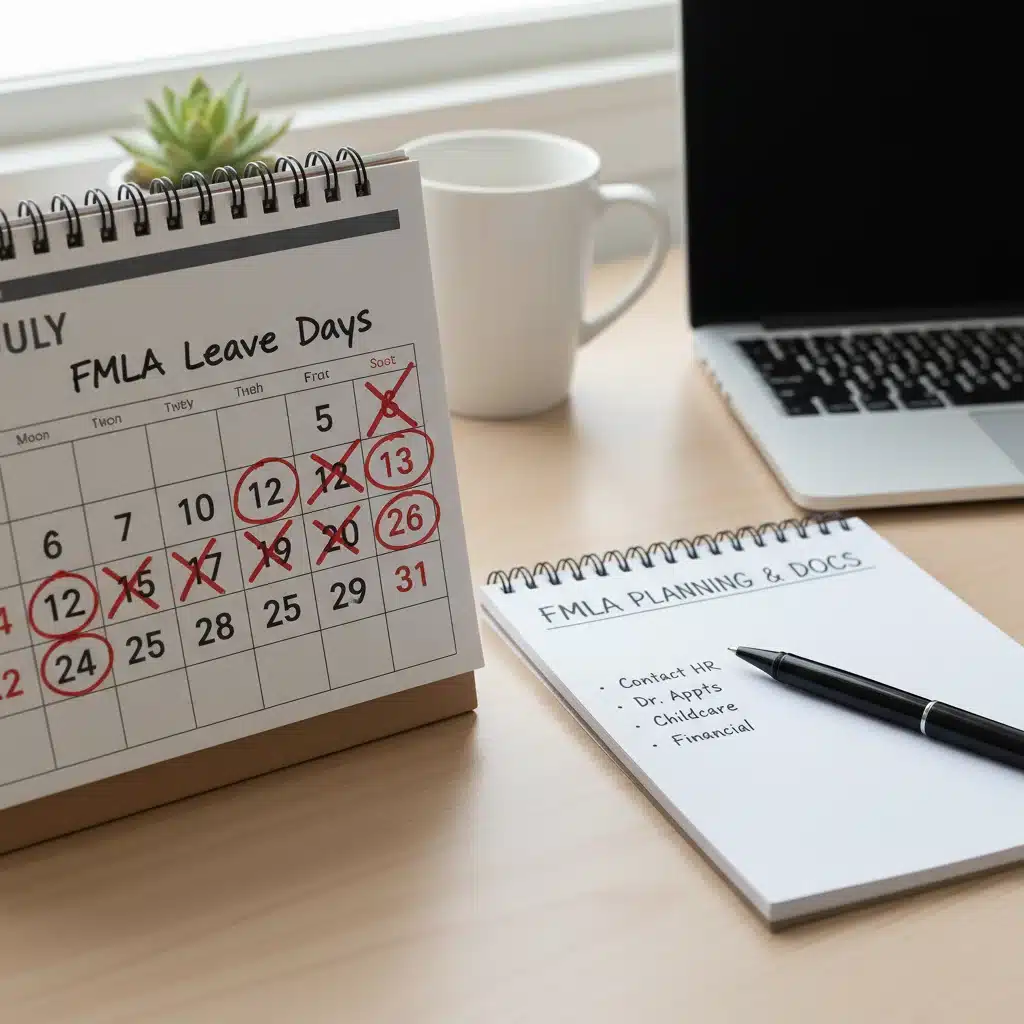
Furthermore, your employer must maintain your group health benefits under the same conditions as if you had not taken leave. While the leave itself is unpaid, you are still responsible for paying your portion of the health insurance premiums. This continuation of benefits is crucial for ensuring access to necessary healthcare during your time away. These protections are vital for maintaining an employee’s financial and health security.
Employer notification requirements
Employers also have clear obligations under FMLA, primarily concerning notification and communication. They must inform employees of their FMLA rights and responsibilities. This includes posting a general notice about FMLA in a conspicuous place at the workplace and providing specific notices to employees who request leave.
- Providing a general FMLA notice poster.
- Giving employees written notice of their FMLA eligibility within five business days of a leave request.
- Notifying employees in writing whether the leave is designated as FMLA-qualifying within five business days of gaining enough information to make that determination.
- Informing employees of their rights and responsibilities, including any requests for medical certification.
These notification requirements are critical for transparency and ensuring employees are fully aware of their entitlements and what is expected of them. Employers who fail to meet these obligations can face legal consequences. Therefore, understanding these two-way responsibilities is key for both employees and employers in 2026.
Navigating intermittent and reduced schedule FMLA leave
The FMLA offers flexibility beyond a continuous block of time off, allowing employees to take leave intermittently or on a reduced schedule. This adaptability is particularly beneficial for managing chronic conditions, ongoing medical treatments, or caring for a family member who needs periodic assistance. Understanding how intermittent and reduced schedule leave works is crucial for optimizing your FMLA benefits in 2026.
While offering greater flexibility, these types of leave also come with specific requirements and considerations for both employees and employers. Proper planning and communication are essential to ensure that such leave is managed effectively and in compliance with FMLA regulations.
What is intermittent FMLA leave?
Intermittent leave is FMLA leave taken in separate blocks of time due to a single qualifying reason. This can be for a few hours at a time, or for several days, as needed. It’s often used for medical appointments, therapy sessions, or periods of incapacity related to a serious health condition.
- Scheduled medical appointments for a serious health condition.
- Periods of incapacity due to a chronic serious health condition (e.g., migraine attacks, asthma attacks).
- Care for a family member’s intermittent needs, such as dialysis or chemotherapy.
The employer cannot require an employee to take more leave than necessary under intermittent FMLA. However, they can require employees to provide medical certification of the need for such leave and may transfer an employee to an alternative position with equivalent pay and benefits that better accommodates the intermittent schedule, if necessary for business operations. This ensures that while employee needs are met, business continuity is also considered.
Reduced schedule FMLA leave explained
Reduced schedule leave involves reducing an employee’s usual number of working hours per workday or workweek. For example, an employee might work half-days for a period, or work fewer days per week, to accommodate treatment or care needs. This type of leave is particularly useful for gradual return to work or managing ongoing care responsibilities.
Similar to intermittent leave, reduced schedule leave must be medically necessary and certified by a healthcare provider. The total amount of leave taken under a reduced schedule cannot exceed the equivalent of 12 workweeks (or 26 workweeks for military caregiver leave) in a 12-month period. Employers must also provide notice of their intent to take such leave, allowing for proper scheduling and workload adjustments. Both intermittent and reduced schedule leave options underscore the FMLA’s commitment to supporting employees through diverse and challenging personal circumstances.
Common FMLA pitfalls and how to avoid them
While the 2026 Family and Medical Leave Act (FMLA): Your Rights to Job-Protected Leave offers crucial protections, both employees and employers can encounter pitfalls if they are not careful. Misunderstandings, lack of communication, or improper documentation can lead to denied leave, legal disputes, or strained workplace relationships. Proactively addressing these common issues is key to a smooth FMLA experience.
Being aware of these potential traps allows both parties to navigate the FMLA process with greater confidence and compliance. It is always better to be over-informed and over-prepared than to face unexpected complications.
Employee responsibilities and documentation
Employees have several responsibilities when requesting FMLA leave. Failing to meet these can jeopardize their claim. The most common pitfall is inadequate or untimely notice to the employer. While emergencies happen, providing as much advance notice as possible is always best practice.
- Providing timely notice of the need for leave (30 days in advance if foreseeable, otherwise as soon as practicable).
- Submitting complete and timely medical certification when requested by the employer.
- Communicating any changes in the need for leave or return-to-work status.
- Adhering to the employer’s usual and customary notice and procedural requirements for requesting leave, unless extraordinary circumstances prevent it.
Proper documentation, especially medical certification, is critical. Incomplete or vague certifications can lead to delays or denials. Employees should work closely with their healthcare providers to ensure all necessary information is provided accurately and promptly. Maintaining clear communication with HR or their supervisor throughout the process is also vital.
Employer compliance challenges
Employers, too, face challenges in ensuring FMLA compliance. Common pitfalls include failing to provide required notices, miscalculating FMLA leave entitlements, or retaliating against employees for taking FMLA leave. These errors can result in costly lawsuits and damage to reputation.
- Failing to post the general FMLA notice or provide individual eligibility/designation notices.
- Improperly denying FMLA leave requests for eligible employees and qualifying reasons.
- Counting non-FMLA leave against an employee’s FMLA entitlement.
- Retaliating against employees for exercising their FMLA rights, such as demotion or termination.
To avoid these issues, employers should have clear FMLA policies, train their HR staff and managers, and consult with legal counsel when complex FMLA situations arise. Consistency in applying FMLA policies across the organization is also crucial. Both employees and employers benefit from a clear understanding of FMLA rules and a commitment to transparent communication, reducing the likelihood of disputes and ensuring the law’s intent is upheld in 2026.
Future outlook and potential FMLA changes in 2026
As we look ahead to 2026, the landscape of labor laws, including the FMLA, is always subject to potential evolution. While the core tenets of the 2026 Family and Medical Leave Act (FMLA): Your Rights to Job-Protected Leave remain steadfast, discussions and proposals for enhancements or adjustments are ongoing. These potential changes often aim to broaden coverage, expand qualifying reasons, or introduce paid leave components, reflecting societal shifts and evolving workforce needs.
Staying informed about legislative discussions and proposed amendments is important for both employees and employers. Any modifications could significantly impact how FMLA is utilized and administered in the coming years.
Ongoing legislative discussions
There are continuous debates at both federal and state levels regarding the scope and benefits of family and medical leave. Advocates often push for expansions to FMLA, citing the need for more inclusive definitions of family, broader coverage for smaller employers, and the introduction of paid leave options. These discussions are influenced by economic conditions, demographic changes, and the experiences of workers across the nation.
For instance, proposals frequently emerge to: expand the definition of ‘family member’ to include domestic partners, grandparents, or siblings; lower the employer size threshold to include smaller businesses; or reduce the employee eligibility requirements. While these are not yet law for 2026, they represent areas of active consideration that could shape future FMLA iterations. Monitoring these legislative trends provides insight into the potential future of job-protected leave.
The push for paid family leave
Perhaps the most significant area of ongoing discussion related to FMLA is the movement towards paid family leave. Currently, FMLA guarantees unpaid leave, which can be a significant financial burden for many families. Various states have already implemented their own paid family leave programs, and there is a strong federal push to establish a national standard.
- Several states have established paid family leave programs, offering partial wage replacement during FMLA-qualifying leave.
- Federal proposals often aim to create a national paid leave fund or provide incentives for employers to offer paid leave.
- The economic and social benefits of paid leave, such as improved infant health and reduced employee turnover, are frequently highlighted in these discussions.
Should a federal paid family leave program be enacted, it would fundamentally transform the impact of FMLA, providing not just job protection but also financial stability during critical life events. While 2026 primarily operates under the unpaid FMLA framework, the momentum for paid leave is undeniable and could bring substantial enhancements in the near future. Both employees and employers should pay close attention to these developments, as they could redefine the landscape of family and medical leave benefits.
| Key Aspect | Brief Description |
|---|---|
| Eligibility | Applies to employers with 50+ employees; employees need 12 months (1,250 hours) service. |
| Qualifying Reasons | Serious health condition, birth/adoption, care for family member, military exigency/care. |
| Leave Duration | Up to 12 weeks unpaid leave (26 for military caregiver leave) per 12-month period. |
| Key Protections | Job restoration to equivalent position and continuation of group health benefits. |
Frequently asked questions about FMLA in 2026
Employees are eligible if they have worked for a covered employer for at least 12 months, accumulated 1,250 hours of service in the past 12 months, and work at a location with 50 or more employees within 75 miles. Both public and private sector employees can qualify.
FMLA leave is generally unpaid. However, employees may choose to use or be required by the employer to use accrued paid leave, such as vacation, sick, or personal time, to cover some or all of the FMLA leave period. This can help maintain income.
A serious health condition involves inpatient care (hospital stay) or continuing treatment by a healthcare provider. This includes chronic conditions, long-term conditions requiring supervision, and permanent/long-term conditions for which treatment may not be effective. Minor illnesses typically do not qualify.
Under federal FMLA, leave for a domestic partner is not explicitly covered unless your state law grants such rights or the domestic partner qualifies as a parent ‘in loco parentis’ to your child. Federal FMLA covers spouses, children, and parents.
Upon return from FMLA leave, you are entitled to be restored to your original job or an equivalent position with the same pay, benefits, and terms of employment. Your employer cannot penalize you for taking protected FMLA leave.
Conclusion
The 2026 Family and Medical Leave Act (FMLA) remains a cornerstone of employee protection in the United States, offering eligible individuals the crucial right to job-protected leave during significant family and medical events. From managing personal serious health conditions to welcoming a new child or supporting military family members, FMLA provides a vital safety net, ensuring that workers can attend to life’s most pressing needs without sacrificing their careers. Understanding the intricacies of eligibility, qualifying reasons, and both employee and employer obligations is paramount for effectively utilizing and complying with this essential federal law. As discussions around paid leave and expanded coverage continue, FMLA’s core principles of job security and benefit continuation will undoubtedly adapt to meet the evolving demands of the modern workforce, reinforcing its importance for years to come.
