AI in Education 2026: Tools & Strategies for Learning
Advertisers
The 2026 impact of AI on education will fundamentally reshape learning, offering advanced tools and innovative strategies for students and educators to enhance engagement and outcomes.
Advertisers
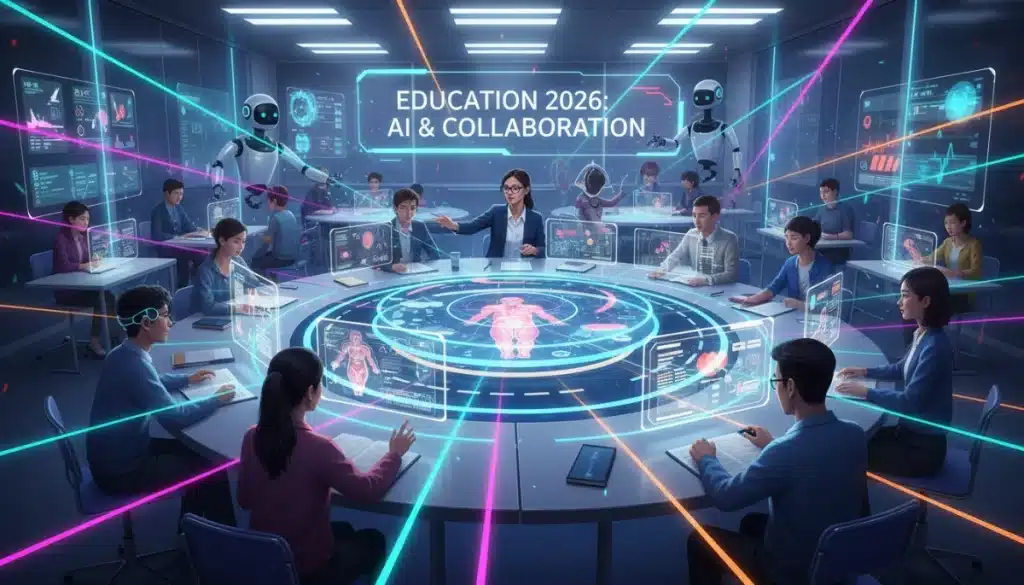
The landscape of learning is rapidly transforming, and by 2026, The 2026 Impact of AI on Education: Tools and Strategies for Students and Educators will be profound. This isn’t just about new gadgets; it’s a fundamental shift in how knowledge is acquired, taught, and assessed. Understanding these changes is crucial for everyone involved in the educational journey.
Understanding the AI Revolution in Learning
The integration of Artificial Intelligence into education is moving beyond theoretical discussions and into practical applications. By 2026, AI won’t just be an optional add-on; it will be an intrinsic part of the educational ecosystem, offering personalized experiences and streamlining administrative tasks for both students and educators.
Advertisers
This revolution is driven by AI’s ability to process vast amounts of data, recognize patterns, and make predictions, leading to more adaptive and responsive learning environments. The goal is to create more equitable and effective educational outcomes, catering to individual needs on an unprecedented scale.
Personalized Learning Pathways
One of the most significant contributions of AI to education is its capacity to deliver truly personalized learning experiences. Traditional classroom models often struggle to accommodate diverse learning styles and paces, but AI algorithms can adapt content, pace, and assessment methods to each student.
- Adaptive Content Delivery: AI platforms can identify a student’s strengths and weaknesses, then present material in a way that maximizes comprehension and retention.
- Tailored Pace Adjustment: Students can progress through topics at their own speed, with AI providing extra support or advanced challenges as needed.
- Individualized Feedback: AI-powered tools offer instant, constructive feedback, helping students understand their mistakes and improve without delay.
The continuous structure approach here emphasizes how these pathways are not static, but rather dynamic systems that evolve with the student. This level of customization ensures that no student is left behind or held back, fostering a more inclusive and efficient learning environment. It’s about creating a learning journey that feels uniquely designed for every individual.
AI Tools for Students: Empowering Self-Directed Learning
For students, the advent of AI in education brings a suite of powerful tools designed to enhance their learning autonomy and efficiency. These tools range from intelligent tutors to sophisticated research assistants, fundamentally changing how students interact with educational content and manage their studies.
The focus is on empowering students to take greater control over their learning process, providing them with resources that were once only available through human intervention. This fosters critical thinking, problem-solving, and self-regulation skills essential for future success.
Intelligent Tutoring Systems
Intelligent tutoring systems (ITS) are perhaps the most direct application of AI to student learning. These systems act as virtual mentors, guiding students through complex subjects, answering questions, and providing explanations tailored to their specific needs.
Unlike static online resources, ITS can engage in a dialogue with students, adapting to their responses and offering targeted interventions. This can significantly reduce the need for one-on-one human tutoring, making high-quality instruction more accessible.
AI-Powered Research Assistants and Study Aids
Beyond tutoring, AI also provides invaluable support for research and study. Students can leverage AI tools to synthesize information, generate summaries, and even practice for exams. This dramatically cuts down on time spent on mundane tasks, allowing more focus on critical analysis and deeper understanding.
- Information Synthesis: AI can quickly sift through vast databases to extract relevant information, helping students conduct more efficient research.
- Automated Summarization: Tools can condense lengthy articles or textbooks into key points, aiding comprehension and revision.
- Practice Question Generation: AI can create customized practice tests based on learning materials, helping students prepare effectively for assessments.
These tools are not meant to replace traditional study methods but to augment them, making learning more efficient and engaging. Students are encouraged to use these resources to deepen their understanding and develop stronger academic habits.
Strategies for Educators: Adapting to the AI Era
For educators, the integration of AI presents both challenges and unparalleled opportunities. Adapting to this new era requires a shift in pedagogical approaches, moving from being sole knowledge providers to facilitators of AI-enhanced learning experiences. The role of the educator becomes more strategic, focusing on nurturing higher-order thinking and socio-emotional skills.
Embracing AI means educators can offload repetitive tasks, allowing them to dedicate more time to personalized student interaction, curriculum development, and innovative teaching methods. This shift redefines professional development and classroom management.
Leveraging AI for Administrative Efficiency
One of the most immediate benefits for educators is the automation of administrative tasks. AI can significantly reduce the time spent on grading, scheduling, and data analysis, freeing up valuable time for more impactful activities.
- Automated Grading: AI can grade multiple-choice questions, short answers, and even provide preliminary feedback on essays, saving hours of manual work.
- Scheduling and Logistics: AI-powered systems can optimize class schedules, manage resources, and streamline communication with students and parents.
- Performance Analytics: AI tools can analyze student performance data to identify trends, predict learning difficulties, and inform instructional adjustments.
By automating these processes, educators can reallocate their energy towards designing engaging lessons, providing individualized mentorship, and fostering a supportive classroom environment. This strategic use of AI ensures that the human element of teaching remains central and strengthened.
Curriculum Redesign: Integrating AI Literacy
As AI becomes ubiquitous, the curriculum itself must evolve to prepare students for a world where AI literacy is as fundamental as digital literacy. This involves not only teaching *with* AI but also teaching *about* AI, ensuring students understand its principles, applications, and ethical implications.
Curriculum redesign for the AI era means developing programs that foster critical thinking about AI, encouraging students to be informed users and responsible creators of AI technologies. This prepares them not just for specific jobs, but for an adaptable mindset in a rapidly changing technological landscape.
Developing AI-Centric Skills
Future curricula will need to emphasize skills that complement AI, rather than compete with it. This includes creativity, critical thinking, complex problem-solving, and emotional intelligence—areas where human capabilities still far surpass those of AI.
Introducing concepts of data science, algorithms, and machine learning at appropriate age levels will also be essential. Students should understand how AI works, its limitations, and how it can be ethically applied in various fields.
The continuous integration of AI literacy throughout K-12 and higher education will ensure that students are not merely passive consumers of technology but active participants in shaping its future. This proactive approach to curriculum development is vital for equipping the next generation with the necessary tools.
Ethical Considerations and Challenges of AI in Education
While the promise of AI in education is vast, it also introduces a host of ethical considerations and challenges that must be addressed proactively. Issues such as data privacy, algorithmic bias, and the potential for over-reliance on technology require careful navigation to ensure that AI serves to enhance, rather than undermine, the educational experience.
Addressing these challenges requires a collaborative effort from policymakers, educators, developers, and parents. Transparent policies, robust data security measures, and ongoing dialogue are crucial for building trust and ensuring responsible AI deployment.
Data Privacy and Security
AI systems often rely on extensive student data to personalize learning. Protecting this sensitive information from breaches and misuse is paramount. Robust security protocols and clear data governance policies are essential to maintain trust and comply with regulations.
- Anonymization and Encryption: Implementing techniques to protect student identities and secure their academic records.
- Consent and Transparency: Ensuring that students, parents, and educators understand what data is collected, how it’s used, and for what purpose.
- Regulatory Compliance: Adhering to strict data protection laws like FERPA in the US and other global privacy standards.
Beyond privacy, the potential for algorithmic bias in AI tools is another significant concern. If AI models are trained on biased datasets, they can perpetuate or even amplify existing inequalities, leading to unfair outcomes for certain student populations. Continuous auditing and diverse data sources are necessary to mitigate this risk.
The Future Role of Educators in an AI-Enhanced Classroom
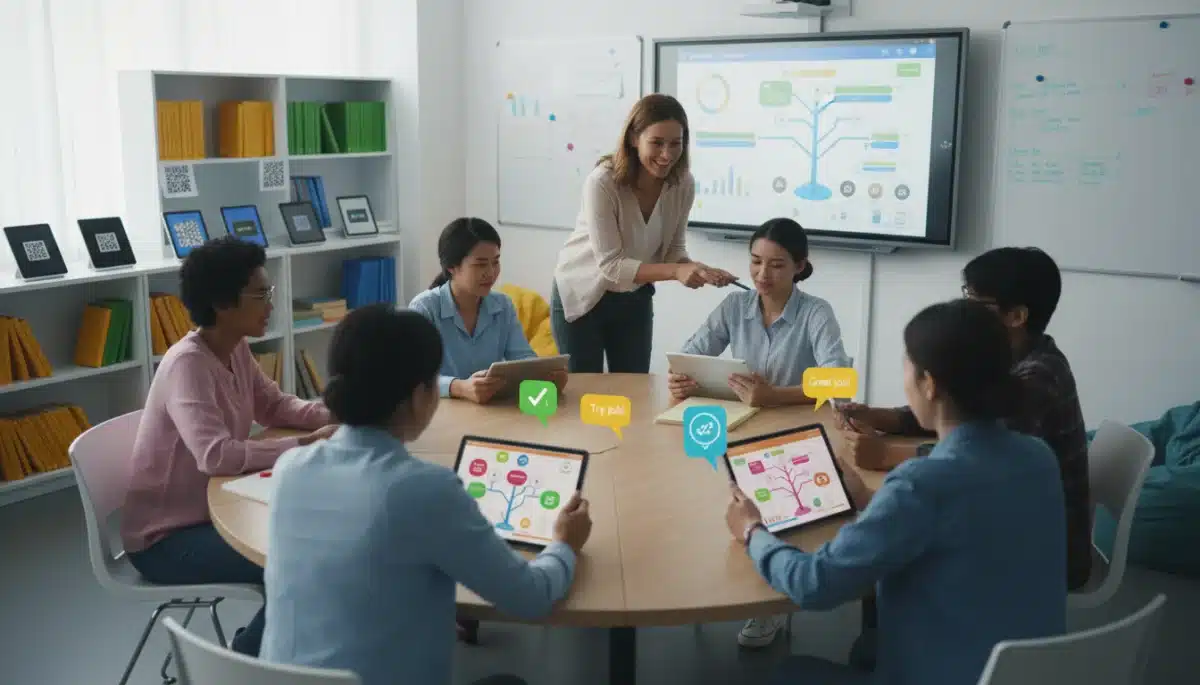
In an AI-enhanced classroom, the role of the educator evolves from being the primary source of information to that of a guide, mentor, and facilitator. AI takes on many of the routine instructional tasks, allowing teachers to focus on higher-value activities such as fostering critical thinking, promoting collaboration, and addressing students’ socio-emotional needs.
This shift emphasizes the irreplaceable human aspects of teaching—empathy, motivation, and the ability to inspire. Educators will become experts in leveraging AI tools to create dynamic, engaging, and personalized learning environments, focusing on the holistic development of each student.
Nurturing Higher-Order Skills
With AI handling rote memorization and basic skill drills, educators can dedicate more time to cultivating complex cognitive abilities. This includes designing projects that require creative problem-solving, facilitating debates that encourage critical analysis, and guiding discussions that build ethical reasoning.
The focus moves towards project-based learning, inquiry-based learning, and interdisciplinary approaches, where students apply knowledge in real-world contexts. Teachers become orchestrators of rich learning experiences, rather than simply disseminators of facts.
Furthermore, the human connection in the classroom remains vital. Educators will play a crucial role in developing students’ social and emotional intelligence, skills that AI cannot replicate. This includes teaching collaboration, communication, resilience, and self-awareness, preparing students not just for careers, but for life in a complex, interconnected world.
| Key Aspect | Brief Description |
|---|---|
| Personalized Learning | AI tailors content and pace to individual student needs, enhancing engagement and effectiveness. |
| Educator Efficiency | AI automates administrative tasks, freeing educators for personalized student interaction. |
| AI Literacy | Curriculum will integrate AI principles and ethical considerations, preparing students for the future. |
| Ethical Challenges | Addressing data privacy, algorithmic bias, and responsible AI use is crucial for equitable education. |
Frequently Asked Questions About AI in Education
By 2026, AI will revolutionize assessment by offering real-time, adaptive evaluations that go beyond traditional tests. AI tools can analyze complex student responses, provide immediate feedback, and even predict learning gaps, leading to more accurate and personalized performance insights. This shift supports continuous improvement rather than just summative grading.
AI primarily benefits educators by automating time-consuming administrative tasks like grading and scheduling. This frees up significant time, allowing teachers to focus more on personalized instruction, student mentorship, and developing engaging, innovative learning experiences. It also provides data-driven insights to better understand student progress and needs.
No, AI is not expected to replace human teachers. Instead, it will augment their capabilities, handling repetitive tasks and providing data-driven insights. Teachers will evolve into facilitators, mentors, and guides, focusing on developing students’ critical thinking, creativity, and socio-emotional skills, which require human empathy and nuanced understanding.
Students can prepare by developing strong critical thinking, problem-solving, and adaptability skills. Embracing digital literacy, understanding basic AI concepts, and focusing on creativity and collaboration will be crucial. Learning to effectively use AI tools as aids, rather than relying on them blindly, will also be a key differentiator in their academic and professional journeys.
Key ethical concerns include student data privacy and security, the potential for algorithmic bias leading to unequal opportunities, and the risk of over-reliance on AI diminishing human critical thinking. Ensuring transparency in AI systems and developing robust ethical guidelines are essential to mitigate these challenges and promote equitable learning environments.
Conclusion
The 2026 impact of AI on education is poised to redefine learning and teaching as we know it. From personalized learning pathways for students to enhanced administrative efficiency for educators, AI offers transformative potential. While challenges related to ethics and implementation exist, a proactive and thoughtful approach will ensure that AI serves as a powerful ally in creating more engaging, effective, and equitable educational experiences for all. Embracing these changes is not just about adopting new technology; it’s about shaping the future of human potential.
