Child Tax Credit 2026: What Families Can Expect

Advertisers
Families nationwide are keenly awaiting clarity on the Child Tax Credit 2026, anticipating legislative changes and understanding how these will shape eligibility and payout amounts for essential financial support.
As 2026 approaches, many American families are looking for answers regarding the future of the Child Tax Credit 2026. This vital federal program has undergone significant changes in recent years, impacting millions of households. Understanding the potential legislative shifts, eligibility criteria, and expected payout structures is crucial for effective family financial planning. This article aims to provide a comprehensive overview, helping you navigate the complexities and prepare for what lies ahead.
Advertisers
Understanding the Child Tax Credit’s Historical Context
Before delving into what 2026 might bring, it’s essential to understand the journey of the Child Tax Credit (CTC). Established in 1997, the CTC was initially a non-refundable credit designed to help offset the costs of raising children. Over the years, it has evolved significantly, particularly with the enhancements introduced by the American Rescue Plan Act of 2021, which dramatically expanded its reach and impact.
The American Rescue Plan temporarily increased the credit amount, made it fully refundable for many families, and allowed for advance monthly payments. These changes provided unprecedented financial relief to millions, significantly reducing child poverty rates. However, these enhancements expired at the end of 2021, reverting the credit to its pre-2021 structure. This reversion has left many families facing reduced benefits, highlighting the ongoing debate about the credit’s future form and function.
Advertisers
Key Milestones in CTC Evolution
- 1997 Establishment: Introduced as a $400 non-refundable credit.
- 2001 Expansion: Increased to $1,000 per child, with some refundable portions.
- 2017 Tax Cuts and Jobs Act: Doubled the credit to $2,000 per child, increased the refundable portion to $1,400, and raised income thresholds.
- 2021 American Rescue Plan: Temporarily increased to $3,600 for children under 6 and $3,000 for children 6-17, made fully refundable, and introduced advance payments.
The historical context underscores the dynamic nature of the CTC. Each legislative change has aimed to address specific economic or social needs, often with varying degrees of success and political consensus. The ongoing discussion around the Child Tax Credit 2026 is a continuation of this rich, complex history, with policymakers weighing the economic impact against budgetary constraints and social welfare goals.
Potential Legislative Changes and Their Impact
The landscape for the Child Tax Credit 2026 is highly dependent on ongoing legislative discussions and political will. Several proposals are currently being debated in Congress, each with the potential to reshape the credit’s structure, eligibility, and generosity. These proposals often reflect different philosophical approaches to family support and economic policy.
One prominent area of discussion revolves around restoring the enhanced benefits seen in 2021. Advocates argue that the fully refundable nature and increased amounts significantly reduced child poverty and provided much-needed stability for low-income families. They push for a permanent or extended version of these enhancements, emphasizing the long-term benefits for child development and economic growth.
Key Proposals on the Table
- Restoration of 2021 Enhancements: Aims to bring back the higher credit amounts ($3,000/$3,600) and full refundability, potentially with advance monthly payments.
- Bipartisan Compromises: Some proposals seek a middle ground, offering a partial increase in the credit or a modified refundability structure to gain broader political support.
- Targeted Approaches: Other ideas focus on targeting benefits more specifically to certain income brackets or demographic groups, perhaps with stricter work requirements.
The outcome of these legislative debates will directly influence how families qualify for and receive the credit in 2026. The political climate, upcoming elections, and economic conditions will all play significant roles in determining which, if any, of these proposals gain traction and ultimately become law. Families should monitor these developments closely, as they could have substantial financial implications.
Who Qualifies? Eligibility Criteria for 2026
Understanding who qualifies for the Child Tax Credit 2026 is paramount for families seeking to benefit from this program. While specific criteria may change based on legislative action, core requirements typically revolve around the child’s age, relationship to the taxpayer, residency, and the family’s income level. The details of these criteria can significantly impact a family’s eligibility and the amount of credit they receive.
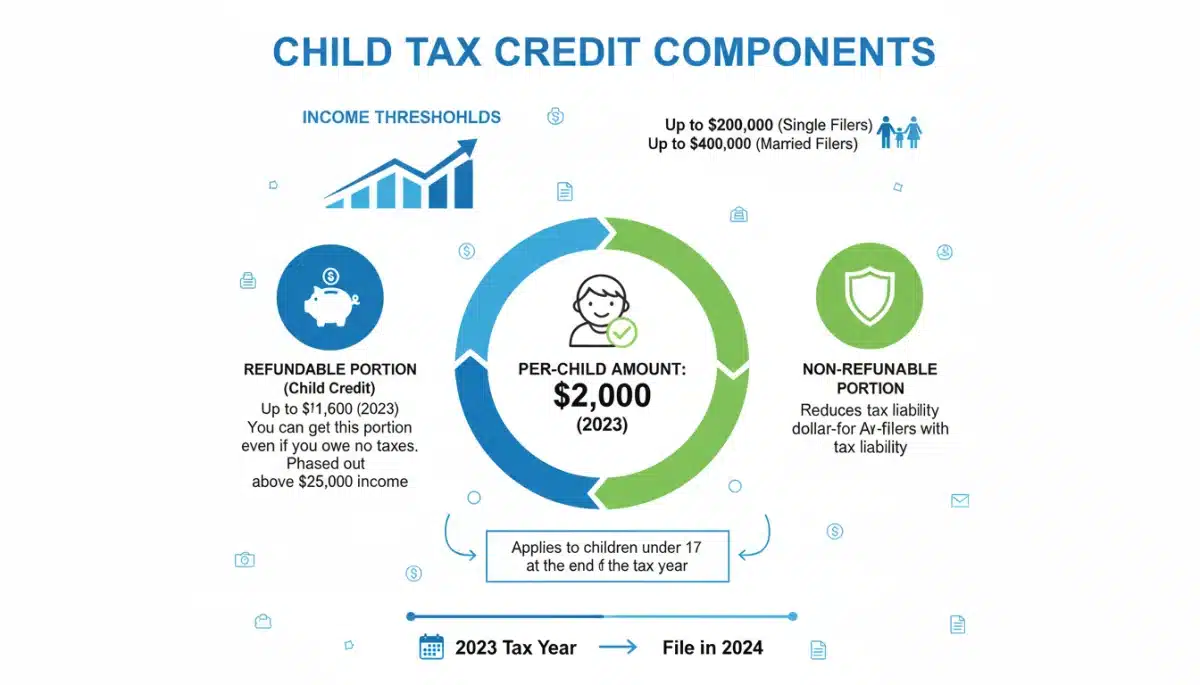
Currently, under the pre-2021 rules that are set to apply in 2026 without new legislation, a qualifying child must be under the age of 17 at the end of the tax year. They must also be a U.S. citizen, national, or resident alien, and have lived with the taxpayer for more than half the year. Furthermore, the child must not provide more than half of their own support for the year. These foundational rules are usually consistent, though income thresholds and refundability rules are often points of legislative contention.
Income Thresholds and Phase-Outs
The credit typically begins to phase out at certain income levels, meaning the amount of credit a family can claim decreases as their income rises. The specific income thresholds and the rate at which the credit phases out are critical details that could be altered by new legislation. For instance, the 2021 expansion significantly raised these thresholds, allowing more middle-income families to receive the full credit.
- Current (Pre-2021) Phase-Out: Begins at $200,000 for single filers and $400,000 for married couples filing jointly.
- Potential 2026 Adjustments: New legislation could lower or raise these thresholds, affecting how many families qualify for the maximum benefit.
The rules governing eligibility for the Child Tax Credit 2026 are complex and subject to change. Families should consult official IRS guidelines or a tax professional once the final legislative framework for 2026 is established to ensure they meet all necessary requirements and claim the maximum benefit they are entitled to.
Expected Payout Structures and Amounts
The payout structure and the actual amount families can expect from the Child Tax Credit 2026 are among the most anticipated aspects for many households. The temporary enhancements of 2021 introduced advance monthly payments, a significant departure from the traditional lump-sum credit claimed at tax time. Whether this feature returns, along with the credit’s overall value, will largely depend on future legislative decisions.
Under the current law, without new legislation, the maximum credit is $2,000 per qualifying child, with up to $1,600 of that being refundable. This means that if a family’s tax liability is less than the credit amount, they could receive a portion of the credit back as a refund, up to the refundable limit. This structure is less generous than the 2021 enhancements, which offered up to $3,600 per child and made the entire amount fully refundable for many low-income families.
Refundability and Advance Payments
The concept of refundability is crucial. A fully refundable credit means that even if a family owes no income tax, they can still receive the full credit amount. This is particularly beneficial for low-income families who often have little or no tax liability. The 2021 advance payments also provided consistent financial support throughout the year, helping families manage ongoing expenses rather than waiting for an annual refund.
- Full Refundability: Allows families with no tax liability to receive the entire credit.
- Partial Refundability: Limits the refundable portion, potentially leaving some low-income families unable to claim the full benefit.
- Advance Payments: Monthly disbursements of the credit, providing regular financial assistance.
The specific amounts and how they are disbursed will directly influence family budgets. A return to the 2021 structure would provide substantial relief, while adherence to the pre-2021 rules would mean a more modest benefit. Families should prepare for various scenarios regarding the Child Tax Credit 2026, understanding that the final payout structure will be determined by legislative outcomes.
Economic and Social Implications of CTC Policies
The design and implementation of the Child Tax Credit 2026 will have profound economic and social implications across the United States. Beyond direct financial assistance to families, the credit influences broader economic indicators, child poverty rates, and overall societal well-being. Policymakers often weigh these broader impacts when debating potential legislative changes.
Economically, a more generous and accessible CTC can stimulate consumer spending, particularly in local communities, as families use the funds for essential goods and services. This can lead to increased economic activity and job creation. Conversely, a less generous credit might lead to reduced spending and increased financial strain for vulnerable households, potentially hindering economic recovery or growth.
Impact on Poverty and Inequality
One of the most significant social impacts of the CTC is its effect on child poverty. Studies on the 2021 expanded CTC showed a dramatic reduction in child poverty, demonstrating the program’s effectiveness as a poverty alleviation tool. A robust CTC can lift millions of children out of poverty, improve child health and educational outcomes, and reduce long-term societal costs associated with poverty.
- Poverty Reduction: Expanded CTCs have a proven track record of significantly lowering child poverty rates.
- Health and Education: Financial stability allows families to invest more in their children’s health, nutrition, and educational opportunities.
- Economic Mobility: By providing a safety net, the CTC can help families achieve greater economic mobility and reduce intergenerational poverty.
The social implications extend to addressing income inequality, providing a more equitable distribution of resources. The debate surrounding the Child Tax Credit 2026 is therefore not just about tax policy, but about shaping the economic future and social fabric of the nation. The choices made will resonate far beyond individual family finances, affecting communities and generations to come.
How Families Can Prepare for 2026 Changes
Given the uncertainty surrounding the Child Tax Credit 2026, proactive preparation is key for families. While the exact details of any legislative changes are still being ironed out, there are several steps households can take now to ensure they are ready for whatever comes next. This includes staying informed, reviewing current financial situations, and planning for different scenarios.
First and foremost, families should prioritize staying updated on legislative developments. Follow reputable news sources, government announcements, and tax policy organizations. The political process can be slow, but being aware of potential proposals and their progression through Congress will provide valuable insight. Understanding the different possibilities will allow for more informed financial planning.
Financial Planning and Budgeting
Regardless of the CTC’s final form, maintaining a robust family budget is always a wise strategy. Consider how your household would manage if the credit remains at its pre-2021 level, or even if it were to be reduced further. Building an emergency fund, minimizing debt, and exploring other available benefits can provide a stronger financial foundation.
- Review Income and Expenses: Understand your current financial standing and identify areas for potential savings.
- Build an Emergency Fund: Aim for at least 3-6 months of living expenses to cushion against financial shocks.
- Explore Other Benefits: Research state and local programs, as well as other federal benefits, for which your family might qualify.
Additionally, keeping accurate records of dependents and income will streamline the tax filing process, regardless of the specific CTC rules. Consulting with a tax advisor can also be beneficial, as they can offer personalized advice based on your unique financial situation and the latest tax laws. By taking these preparatory steps, families can better navigate the evolving landscape of the Child Tax Credit 2026 and ensure their financial well-being.
| Key Aspect | Description for 2026 |
|---|---|
| Legislative Outlook | Ongoing debates for restoring 2021 enhancements or bipartisan compromises. |
| Eligibility | Ages, residency, and relationship to child remain key; income thresholds are under review. |
| Payout Amounts | Likely $2,000 per child, with up to $1,600 refundable, unless new legislation passes. |
| Economic Impact | Significant influence on child poverty, economic stimulus, and family financial stability. |
Frequently Asked Questions About the Child Tax Credit 2026
As of now, without new legislation, the Child Tax Credit for 2026 is not expected to be fully refundable for all families. The refundable portion is capped at $1,600 per child under current law. Full refundability, as seen in 2021, would require congressional action.
Under current law, the Child Tax Credit begins to phase out for single filers with incomes over $200,000 and for married couples filing jointly with incomes over $400,000. These thresholds could change if new legislation is passed before 2026.
No, advance monthly payments for the Child Tax Credit, which were a feature of the 2021 expansion, are not currently scheduled for 2026. Their return would necessitate specific legislative approval and implementation by the IRS.
To qualify for the Child Tax Credit in 2026 under existing law, a child must be under the age of 17 at the end of the tax year. This means they must be 16 years old or younger as of December 31, 2026.
The most accurate and up-to-date information regarding the 2026 Child Tax Credit will come from official sources such as the Internal Revenue Service (IRS) website and congressional legislative updates. Consulting a qualified tax professional is also highly recommended for personalized advice.
Conclusion
The future of the Child Tax Credit 2026 remains a significant point of discussion and potential change for American families. While the current outlook suggests a return to pre-2021 credit amounts and eligibility rules, legislative efforts are ongoing to restore some of the expanded benefits that proved so impactful. Families must stay informed about these developments, understand the potential implications for their financial planning, and be prepared to adapt to any new regulations. The CTC continues to be a cornerstone of federal support for children and families, and its evolution will undoubtedly shape the financial well-being of millions across the nation.
